
The Heart: the flawless miracle of life
The human heart beats roughly 100,000 times a day, pumping over 7600 litres of oxygen-rich blood through 60,000 miles of vessels. It operates non-stop for a lifetime without a single scheduled break, adjusting instantly whether you are sleeping, sprinting, or falling in love.
The heart isn’t merely a pump; it’s a symphony of cells, molecules, and energy, all working in harmony. It is worth repeating: It beats around 100,000 times daily!, pumping 7,600 litres of blood through a vast network of vessels. But it does more than just that; it adjusts its pace to match our needs, whether we’re resting, running, laughing, or crying – a little powerhouse that never misses a beat and all without our conscious control.
The heart’s journey begins even before birth, often pumping as early as 22 days after conception, marking the start of its lifelong mission. Its cells are knitted into a strong, flexible pattern that allows it to contract and expand with each beat, pushing blood to every part of the body. This extraordinary organ has four chambers that fill and empty in perfect rhythm, gathering oxygen-rich blood from the lungs and sending it throughout the body. Each chamber functions like a room with one-way doors, or valves, that open and close precisely, creating the familiar lub-dub sound.
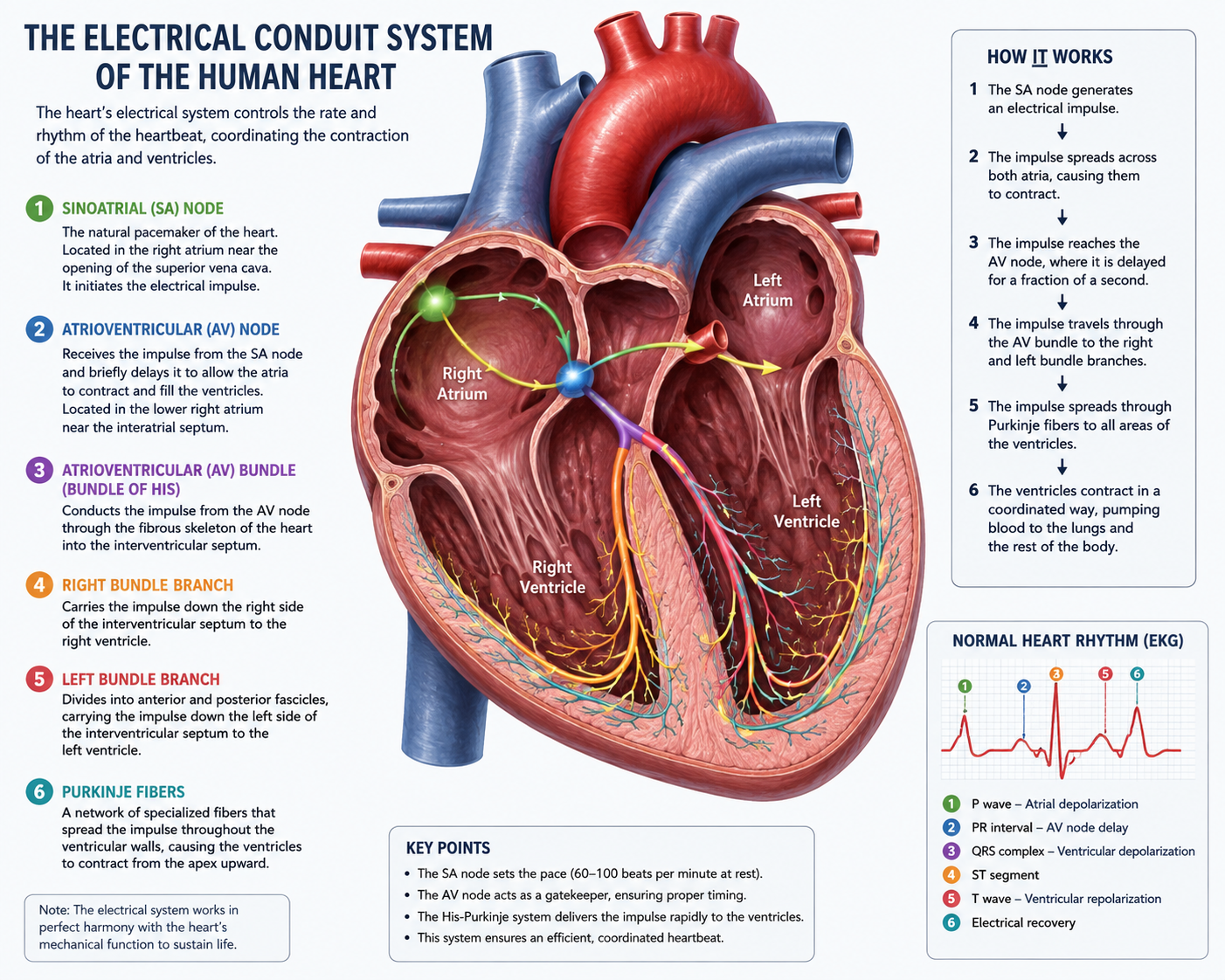
While we often view the heart as a muscle, it is fundamentally an electrical system—and at the absolute center of this miracle sits a tiny cluster of specialized cells called the Sinoatrial (SA) Node. This is the true miracle of life that powers this flawless machine called The Heart.
The Body’s Natural Pacemaker
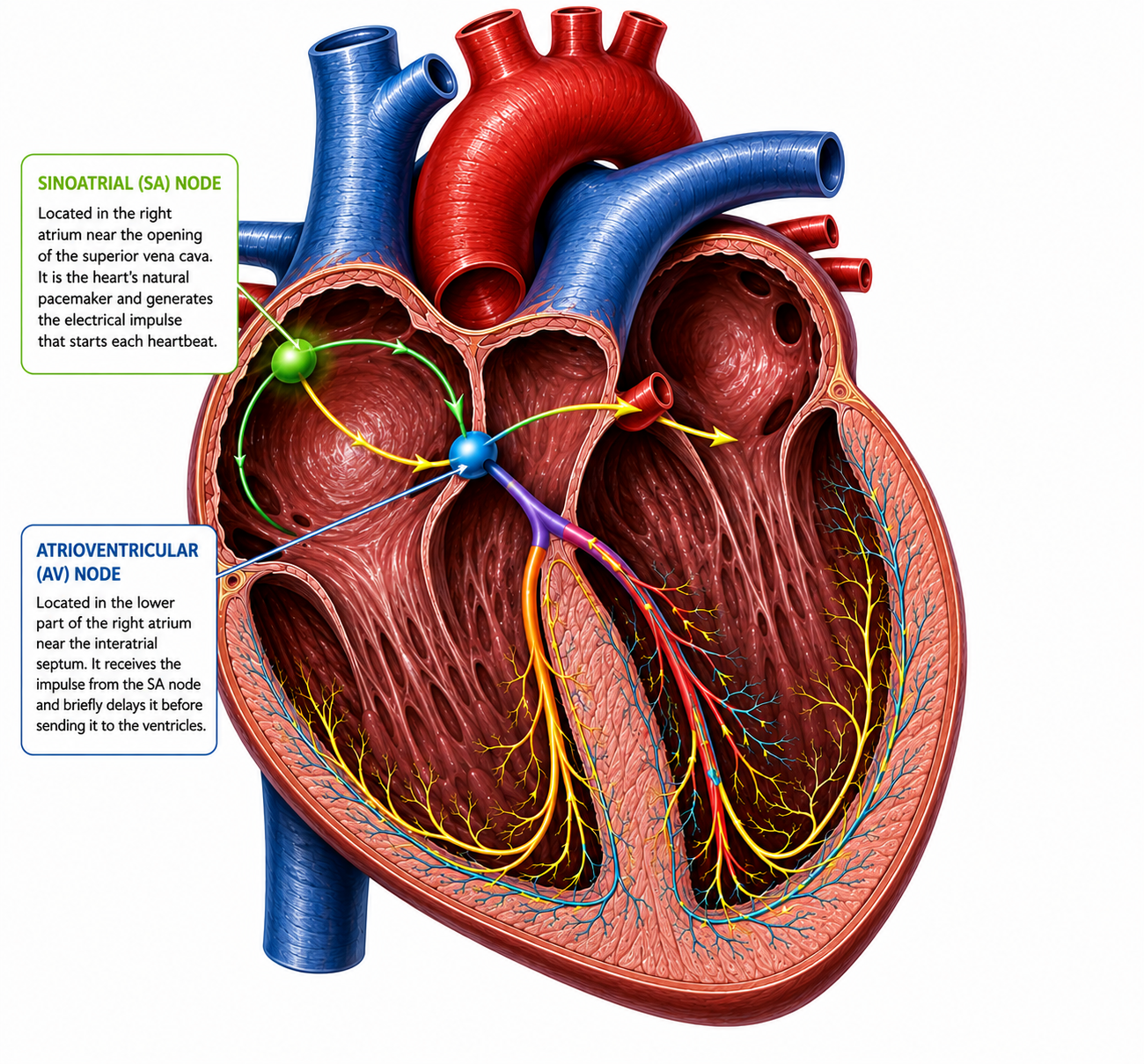
Tucked away in the upper wall of the right atrium, the SA node is smaller than a single grain of rice, yet it dictates the rhythm of your existence. No exaggeration here….
What makes the SA node astonishing is a property known as automaticity. Unlike skeletal muscles that require an explicit command from the brain to move, the cells within the SA node generate their own electricity. They self-charge and fire automatically, acting as the master metronome for the entire organ.
How the Electrical Spark Happens
The magic of the SA node relies on a delicate biological sequence occurring every fraction of a second:
1.The Ionic Leak: Setting the foundation for self-firing.
Specialized ion channels in the pacemaker cells slowly leak sodium ions inward. This gradual shift in voltage is unique to SA node cells and prevents them from ever remaining at a static resting point.
2.Reaching the Threshold: Triggering the electrical wave.
Once the internal voltage reaches a specific threshold, calcium channels open rapidly, flooding the cell and causing a sudden electrical spike (action potential).
3.Cascade Across the Chambers: Synchronized contraction.
This electrical spark instantly radiates across the atrial walls, causing the upper chambers to contract and squeeze blood into the ventricles below.
4.Relay to the AV Node: Passing the baton.
The impulse travels down to the Atrioventricular (AV) node, which briefly delays the signal to allow the ventricles time to fill completely before forcing blood out to the lungs and body.
Adaptability in Real-Time
Though the SA node generates its own rhythm, it isn’t isolated. It constantly listens to the autonomic nervous system to adjust your heart rate on demand:
- Sympathetic Stimulation: Releases adrenaline and noradrenaline, accelerating the SA node’s firing rate when you exercise, face stress, or experience intense emotion.
- Parasympathetic Control: Uses the vagus nerve to release acetylcholine, gently slowing the SA node down when you rest and relax.
The Spark Behind Every Moment
Every breath, thought, and step you take (remember that song?…Sting/The Police 1983…) relies on this microscopic spark plug. The Sinoatrial (SA) node works silently in the background, firing around 60 to 100 times every minute, ensuring that the engine of life never misses a beat. A true miracle of life! The touch of divinity…