
The human body is an extraordinary network of interconnected systems, constantly communicating to maintain balance. One of the most fascinating parts of this network is the vagus nerve—a long, complex nerve that plays a major role in regulating many essential functions, from heart rate and digestion to breathing and the body’s response to stress.
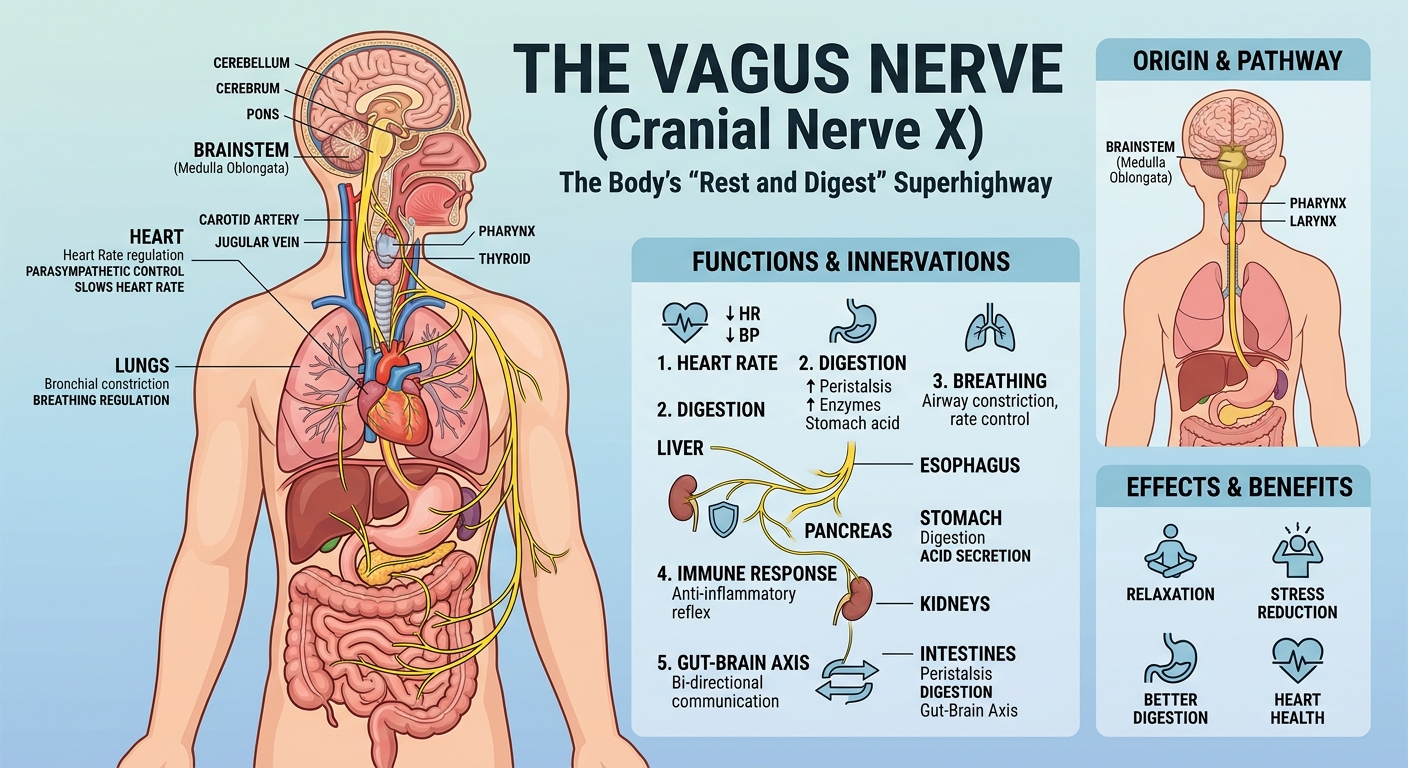
The name vagus comes from the Latin word for “wandering,” an appropriate description because the vagus nerve travels extensively throughout the body. It originates in the brainstem and extends through the neck and chest into the abdomen, communicating with organs including the heart, lungs, stomach, intestines, liver, and pancreas.
What Does the Vagus Nerve Do?
The vagus nerve is the main component of the parasympathetic nervous system, sometimes described as the “rest and digest” branch of the autonomic nervous system. While the sympathetic nervous system helps prepare us for action during stress, the parasympathetic system generally promotes relaxation, digestion, recovery, and energy conservation.
Through its extensive network, the vagus nerve helps regulate:
- Heart rate and cardiovascular function
- Breathing
- Digestion and intestinal movement
- Swallowing
- Certain aspects of immune and inflammatory activity
- Communication between the digestive tract and brain
- The body’s response to stress and relaxation
Interestingly, vagal communication is not simply a one-way system from the brain to the organs. A large proportion of the nerve’s fibers carry information from the organs back to the brain. This means the brain is continually receiving information about what is happening throughout the body.
The Vagus Nerve and the Gut-Brain Connection
One of the most interesting areas of vagus nerve research involves the relationship between the brain and digestive system.
The digestive tract contains its own extensive nervous system, called the enteric nervous system. The vagus nerve provides an important communication pathway between the digestive system and the brain.
This connection helps explain why emotions can affect digestion. Stress may influence appetite, stomach function, intestinal movement, and other digestive processes. Conversely, signals originating in the digestive system can influence brain activity and emotional responses.
This is one reason researchers are increasingly interested in the relationship between the vagus nerve, the microbiome, digestion, and mental well-being.
The Vagus Nerve and Stress
Modern life often exposes us to prolonged psychological and physical stress. When we perceive a threat, the sympathetic nervous system becomes more active, increasing alertness and preparing the body to respond.
The parasympathetic nervous system provides an important counterbalance. Vagal activity is associated with many of the body’s restorative processes, including slowing the heart and supporting digestion.
The concept of “vagal tone” is sometimes used to describe aspects of vagal regulation and cardiovascular flexibility. Researchers have studied measures such as heart-rate variability (HRV) as indirect indicators of autonomic nervous system regulation.
However, it is important to remember that HRV is influenced by many factors and should not be interpreted as a simple measurement of vagus nerve health.
Can You Stimulate the Vagus Nerve Naturally?
There is growing interest in lifestyle practices that may support healthy parasympathetic activity. These include slow, controlled breathing, regular physical activity, adequate sleep, relaxation practices, and stress-management techniques.
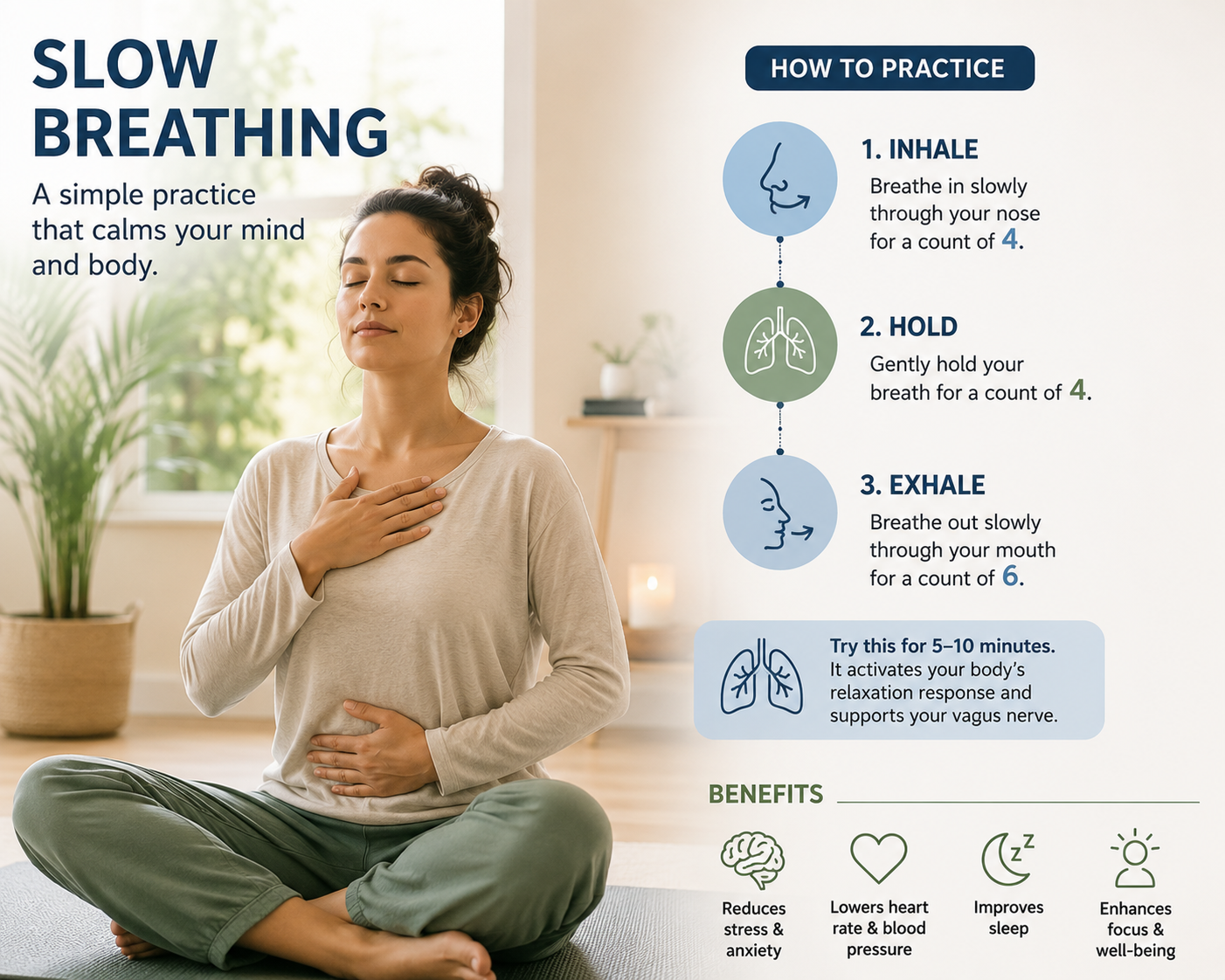
For example, slow breathing with a longer, comfortable exhalation can influence autonomic nervous system activity and may promote a calmer physiological state.
Meditation, yoga, mindfulness, social connection, and other relaxation practices have also been investigated for their effects on stress and autonomic regulation.
These approaches should not be thought of as magical ways to “reset” the vagus nerve. Rather, they are healthy behaviors that may help support the body’s normal mechanisms for regulating stress and recovery.
The Future of Vagus Nerve Research
Scientists are also investigating medical technologies that directly stimulate the vagus nerve. Vagus nerve stimulation (VNS) is an established medical treatment for certain conditions, including some forms of epilepsy and treatment-resistant depression. Researchers continue to investigate whether vagal stimulation could have applications in other neurological, psychiatric, inflammatory, and metabolic conditions.
This field is evolving rapidly, and many claims about “vagus nerve hacks” found online go beyond what scientific evidence currently supports.
A Powerful Connection
The vagus nerve reminds us that the brain and the rest of the body are not separate systems. They are engaged in constant communication.
From the rhythm of the heart to the movement of the digestive tract, the vagus nerve helps coordinate countless processes that occur largely outside conscious awareness. Understanding this remarkable nerve gives us a deeper appreciation of the body’s ability to maintain balance—and of the profound connection between the brain, organs, emotions, and overall well-being.
The vagus nerve may truly be one of the body’s most remarkable communication highways. The 401 of Ontario…