
Vitamin B3: Benefits, Medical Uses, and Potential Side Effects
Vitamin B3, commonly known as niacin, is one of the eight essential B vitamins required for maintaining overall health. As a water-soluble vitamin, it is not stored in significant amounts by the body, making regular dietary intake important. Vitamin B3 plays a crucial role in converting food into energy, supporting healthy skin, maintaining normal brain function, and promoting the health of the nervous and digestive systems. In addition to its nutritional importance, vitamin B3 has several well-established medical uses, particularly in the management of certain cholesterol disorders.
What Is Vitamin B3?
Vitamin B3 exists in two primary forms: nicotinic acid (niacin) and niacinamide (nicotinamide). Although both forms help prevent vitamin B3 deficiency, they have different therapeutic applications. Nicotinic acid is primarily used to improve blood lipid levels, while niacinamide is commonly found in dietary supplements and skincare products because it does not produce the characteristic “niacin flush.”
Within the body, vitamin B3 is converted into two essential coenzymes—nicotinamide adenine dinucleotide (NAD) and nicotinamide adenine dinucleotide phosphate (NADP). These coenzymes participate in hundreds of biochemical reactions, including energy production, DNA repair, cell signalling, and antioxidant defence.

Health Benefits of Vitamin B3
Vitamin B3 contributes to numerous physiological functions that support overall health.
Energy metabolism: Niacin helps convert carbohydrates, fats, and proteins into usable energy. Every cell in the body relies on NAD and NADP to carry out essential metabolic processes.
Healthy skin: Niacinamide supports the skin’s natural barrier, helping to retain moisture and reduce water loss. It has become a popular ingredient in skincare products because it may improve uneven skin tone, reduce redness, minimise the appearance of fine lines, and help manage acne-prone skin.
Nervous system function: Vitamin B3 supports normal brain and nerve function by assisting with cellular communication and energy production within nerve cells.
DNA repair and cellular health: NAD plays an important role in repairing damaged DNA and maintaining healthy cells, making vitamin B3 essential for normal growth and tissue maintenance.
Reduction of fatigue: By supporting efficient energy metabolism, vitamin B3 contributes to reducing tiredness and fatigue when consumed as part of a balanced diet.
Medical Uses of Vitamin B3
While adequate dietary intake is sufficient for most healthy individuals, higher doses of vitamin B3 may be prescribed for specific medical conditions.
Treatment of Pellagra
The most important medical use of vitamin B3 is the treatment and prevention of pellagra, a disease caused by severe niacin deficiency. Pellagra is characterised by the “three Ds”: dermatitis, diarrhoea, and dementia. If left untreated, it can eventually become fatal. Treatment with niacin or niacinamide usually leads to rapid improvement when the deficiency is identified early.
Management of High Cholesterol
Prescription-strength nicotinic acid has historically been used to help manage abnormal cholesterol levels. It can:
- Increase high-density lipoprotein (HDL or “good”) cholesterol.
- Reduce low-density lipoprotein (LDL or “bad”) cholesterol.
- Lower triglyceride levels.
However, its routine use for cholesterol management has declined in recent years. Modern cholesterol-lowering medicines, particularly statins, generally provide greater cardiovascular benefits with fewer side effects. As a result, high-dose niacin is now used less frequently and only in selected patients under medical supervision.
Dermatological Uses
Niacinamide is widely used in dermatology. Topical formulations may help improve acne, rosacea, eczema, and signs of skin ageing by reducing inflammation, strengthening the skin barrier, and improving hydration. Oral niacinamide has also been studied for reducing the risk of certain non-melanoma skin cancers in high-risk individuals, although treatment decisions should always be made by a healthcare professional.
Dietary Sources of Vitamin B3
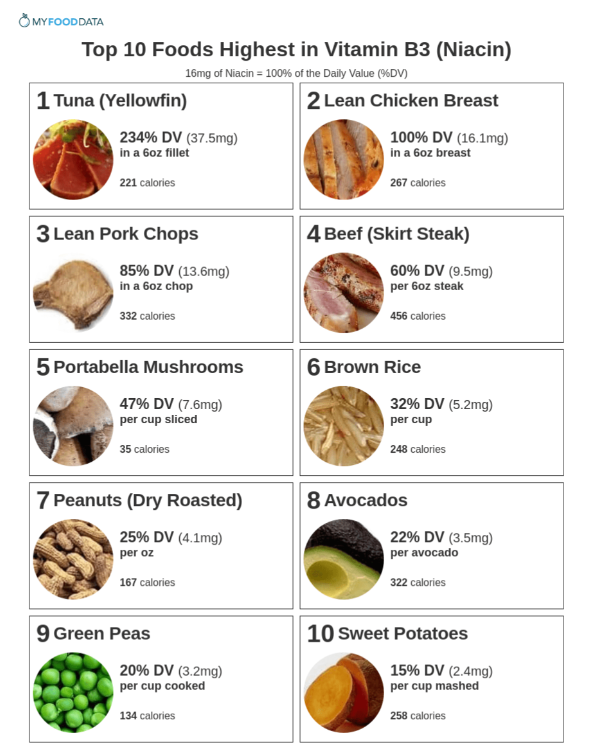
Vitamin B3 is naturally present in many foods, making deficiency uncommon in people with a varied diet. Good dietary sources include:
- Chicken and turkey
- Beef and liver
- Tuna and salmon
- Peanuts
- Mushrooms
- Brown rice
- Whole grains
- Fortified breakfast cereals
- Legumes
The body can also produce small amounts of niacin from the amino acid tryptophan, which is found in protein-rich foods such as eggs, milk, poultry, and fish.
Side Effects and Safety
Vitamin B3 obtained from food is considered safe and is not associated with adverse effects. However, high-dose supplements, particularly nicotinic acid, may cause side effects.
The most common side effect is niacin flushing, which causes temporary redness, warmth, itching, or tingling of the face, neck, and upper body. Although uncomfortable, flushing is generally harmless and usually becomes less noticeable with continued treatment.
Other possible side effects include:
- Nausea or stomach discomfort
- Indigestion
- Headache
- Dizziness
- Increased blood sugar levels, particularly in people with diabetes
- Elevated uric acid levels, which may trigger gout in susceptible individuals
More serious adverse effects are uncommon but can occur with prolonged use of high-dose niacin. These include liver inflammation or liver damage, severe gastrointestinal symptoms, irregular heartbeat, and muscle-related complications, particularly when niacin is combined with certain cholesterol-lowering medications. Regular medical monitoring is therefore recommended for anyone taking prescription-strength niacin.
Individuals with liver disease, active stomach ulcers, severe gout, or poorly controlled diabetes should consult their healthcare provider before taking high-dose vitamin B3 supplements.
Dr. Abram Hoffer and Vitamin B3
Dr. Abram Hoffer (1917–2009) is one of the physicians most closely associated with vitamin B3 (niacin). His work was pioneering and remains influential in some areas of nutritional and orthomolecular medicine, although many of his conclusions remain controversial and have not been widely adopted into mainstream medical practice.
Dr. Abram Hoffer was a Canadian psychiatrist and biochemist who, together with colleagues such as Dr. Humphry Osmond, began researching the therapeutic potential of high-dose vitamin B3 in the 1950s. They hypothesised that certain psychiatric illnesses, particularly schizophrenia, might be related to biochemical imbalances that could be corrected with nutritional therapy.

Hoffer believed that administering high doses of niacin (nicotinic acid) or niacinamide (nicotinamide) alongside other nutrients, such as vitamin C, could improve symptoms of schizophrenia when used in combination with conventional psychiatric care. This approach became one of the foundations of orthomolecular medicine, a field later popularised by Nobel laureate Linus Pauling.
The Orthomolecular Theory
Hoffer proposed that some individuals produced excessive amounts of compounds called adrenochromes, oxidation products of adrenaline. He theorised that these compounds could contribute to psychotic symptoms. According to his hypothesis, vitamin B3 might reduce the formation of these compounds while supporting normal brain metabolism through its role in producing the coenzymes NAD and NADP.
Although this biochemical theory generated considerable interest at the time, subsequent research has not provided strong evidence to support the adrenochrome hypothesis as a cause of schizophrenia.
Clinical Research
Between the 1950s and 1970s, Hoffer published numerous studies reporting improved recovery rates in patients receiving high-dose niacin in addition to standard psychiatric treatment. However, many of these early studies had methodological limitations by today’s standards, including small sample sizes and study designs that would now be considered less rigorous.
Later randomised controlled trials generally failed to demonstrate consistent benefits of high-dose niacin for schizophrenia. As a result, major psychiatric organisations do not recommend vitamin B3 as a standard treatment for schizophrenia or other serious mental illnesses.
Other Areas of Interest
Beyond psychiatry, Hoffer advocated vitamin B3 supplementation for a wide variety of conditions, including:
- Depression and anxiety
- Alcohol dependence
- Arthritis
- Cardiovascular disease
- Ageing
- General health promotion
Influence on Nutritional Medicine
Despite the controversy surrounding many of his claims, Dr. Hoffer helped stimulate scientific interest in the relationship between nutrition and mental health. His work contributed to the development of nutritional psychiatry and encouraged further research into the role of vitamins and other nutrients in brain function.
Today, researchers continue to investigate how nutrition influences mental health, although modern approaches focus on evidence-based dietary interventions rather than high-dose vitamin therapy alone.
A Balanced Perspective
Dr. Hoffer’s work occupies an important place in the history of nutritional medicine because it challenged conventional thinking and encouraged exploration of nutrition’s role in disease. However, it is equally important to recognise that many of his therapeutic claims have not been confirmed by large, high-quality clinical trials.
Current medical evidence supports the use of vitamin B3 for:
- Preventing and treating niacin deficiency (pellagra).
- Selected patients with abnormal cholesterol levels under medical supervision.
- Certain dermatological applications of niacinamide.
High-dose vitamin B3 should only be taken under the guidance of a healthcare professional because it can cause adverse effects, including skin flushing, gastrointestinal upset, elevated blood sugar, liver toxicity, and an increased risk of gout in susceptible individuals.
In summary, Dr. Abram Hoffer remains a significant historical figure in the study of vitamin B3 and nutritional psychiatry. His work inspired decades of research into nutrition and mental health, but many of his therapeutic recommendations have not been incorporated into mainstream medical practice because the supporting evidence has not consistently demonstrated clinical benefit.
Conclusion
Vitamin B3 is an essential nutrient that supports energy production, healthy skin, nervous system function, and cellular repair. Most people can obtain sufficient amounts through a balanced diet rich in meat, fish, whole grains, legumes, and fortified foods. Although vitamin B3 also has important medical applications—particularly in treating pellagra and, in selected cases, managing abnormal cholesterol levels—high-dose supplementation should only be used under medical supervision due to the risk of side effects. Maintaining adequate vitamin B3 intake through a healthy diet remains the safest and most effective way to support long-term health and well-being.